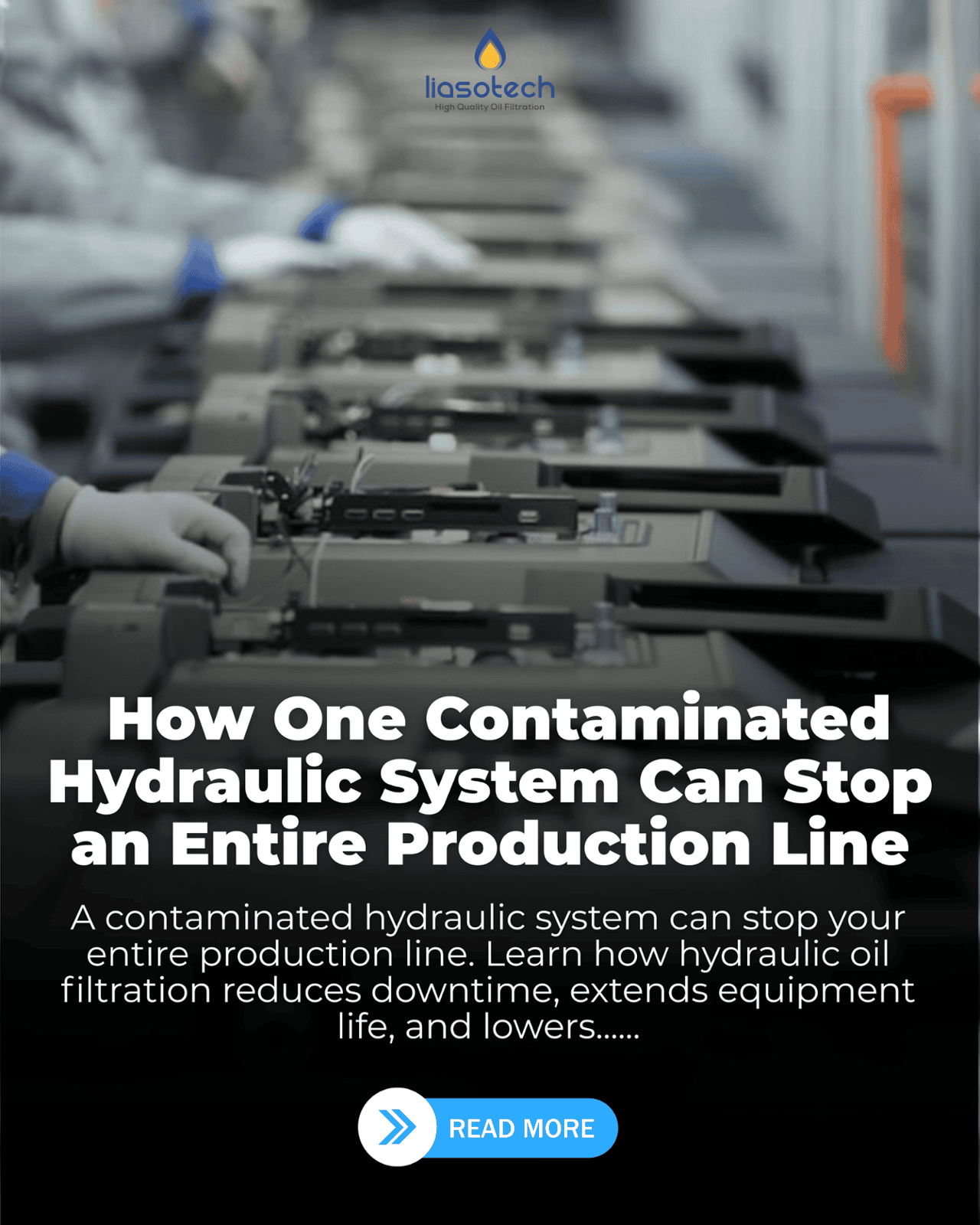
Every production manager prepares for machine breakdowns. Spare parts are stocked, maintenance schedules are planned, and preventive inspections are carried out regularly. Yet one of the biggest causes of unexpected production loss often goes unnoticed—hydraulic oil contamination.
A few microns of dirt, a small amount of water, or the gradual buildup of sludge inside hydraulic oil can bring an entire production line to a standstill. In industries such as steel, cement, power, mining, plastics, automotive, and engineering, one contaminated hydraulic system can trigger a chain reaction of equipment failures, costly downtime, and expensive repairs.
This is why hydraulic oil filtration has become a critical part of modern predictive maintenance.
Why Hydraulic Systems Fail ?
Hydraulic systems rely on clean oil to transmit power, lubricate moving components, dissipate heat, and protect precision parts from wear.
However, every operating hour introduces contaminants into the oil.
Common sources include:
Dust entering through breathers and seals
Metal particles generated from component wear
Water contamination from condensation and leaking coolers
Oxidation caused by high operating temperatures
Sludge and varnish formation
Contaminated new oil during storage or transfer
Without an effective industrial oil filtration system, these contaminants continue circulating throughout pumps, valves, cylinders, servo valves, and actuators.
The result is accelerated component wear and declining system performance.
The Domino Effect of Oil Contamination
Many maintenance teams assume contamination affects only one component.
The reality is very different.
When contamination reaches the hydraulic reservoir, every connected component becomes vulnerable.
A single contaminated pump can spread microscopic metal particles throughout the circuit, damaging:
Hydraulic pumps
Servo valves
Proportional valves
Hydraulic cylinders
Bearings
Directional control valves
Pressure relief valves
Heat exchangers
Eventually, one failed component causes pressure loss throughout the system.
The Hidden Cost of One Hydraulic Failure
The replacement cost of a hydraulic pump is only one part of the equation.
The real expenses include:
Production Downtime
One hydraulic failure may stop production for several hours—or even days.
For many manufacturing plants, every hour of downtime costs thousands or even lakhs of rupees in lost production.
Emergency Maintenance
Unexpected failures require immediate labour, emergency spare parts, contractor support, and overtime maintenance.
These costs quickly exceed the value of the failed component itself.
Oil Replacement
Many plants replace the entire oil charge after contamination.
Large hydraulic reservoirs often contain hundreds or thousands of litres of oil, making replacement expensive.
Secondary Equipment Damage
Contaminated oil rarely damages only one component.
It continues circulating through the system until filtration removes it.
Why Replacing Oil Isn't the Best Solution
Many facilities still respond to contamination by draining and replacing hydraulic oil.
Unfortunately, new oil is not always clean.
Fresh lubricant frequently contains contamination levels above what precision hydraulic equipment can tolerate.
Replacing oil also involves:
Production shutdown
Disposal costs
Labour
Refilling
Flushing
Restart procedures
Instead of replacing usable oil, many industries now choose hydraulic oil filtration systems that restore oil cleanliness while equipment remains in service.
How Hydraulic Oil Filtration Solves the Problem
A modern hydraulic oil filtration machine continuously removes harmful contaminants before they damage equipment.
High-efficiency filtration systems remove:
Solid particles down to very fine micron levels
Water contamination
Sludge
Oxidation products
Varnish precursors
When combined with regular oil analysis and oil testing, filtration helps maintain optimal oil cleanliness throughout the equipment's operating life.
The benefits include:
Reduced equipment failures
Longer hydraulic pump life
Improved valve reliability
Lower maintenance costs
Extended oil service life
Reduced oil consumption
Higher machine availability
Improved production efficiency
Industries That Benefit Most
Hydraulic oil contamination affects almost every manufacturing sector.
Industries that benefit from industrial oil filtration include:
Steel Plants
Cement Plants
Power Plants
Mining Operations
Paper Mills
Plastic Processing
Automotive Manufacturing
Engineering Industries
Marine Applications
Heavy Equipment Manufacturing
Even experienced maintenance teams cannot determine oil condition by appearance alone.
Oil may look clean while still containing millions of damaging microscopic particles.
Routine oil analysis provides valuable information about:
ISO Cleanliness Code
NAS Cleanliness Level
Moisture content
Particle count
Viscosity
Wear metals
Oxidation
Remaining oil life
Why Choose Liasotech?
At Liasotech Pvt. Ltd., we help industries shift from reactive maintenance to proactive oil management.
Our solutions include:
Industrial Oil Filtration Systems
Hydraulic Oil Filtration Machines
Vacuum Dehydration Filtration Systems
Oil Analysis and Testing Services
Portable Oil Filtration Units
On-site Oil Filtration Services
Customized Oil Purification Solutions
Our systems help plants achieve cleaner oil, longer equipment life, lower maintenance costs, and significantly reduced production downtime.
Conclusion
A contaminated hydraulic system rarely fails without warning. The warning signs are often hidden inside the oil itself.
Ignoring contamination allows microscopic particles and moisture to circulate through every critical component, increasing wear, reducing efficiency, and eventually bringing production to a halt.
Investing in hydraulic oil filtration isn't just about cleaner oil—it's about protecting your equipment, maximizing uptime, extending oil life, and improving profitability.
If your facility still relies on routine oil replacement instead of proactive filtration, it may be time to rethink your maintenance strategy.
Talk to the experts at Liasotech today and discover how the right industrial oil filtration solution can keep your production line running without interruption.