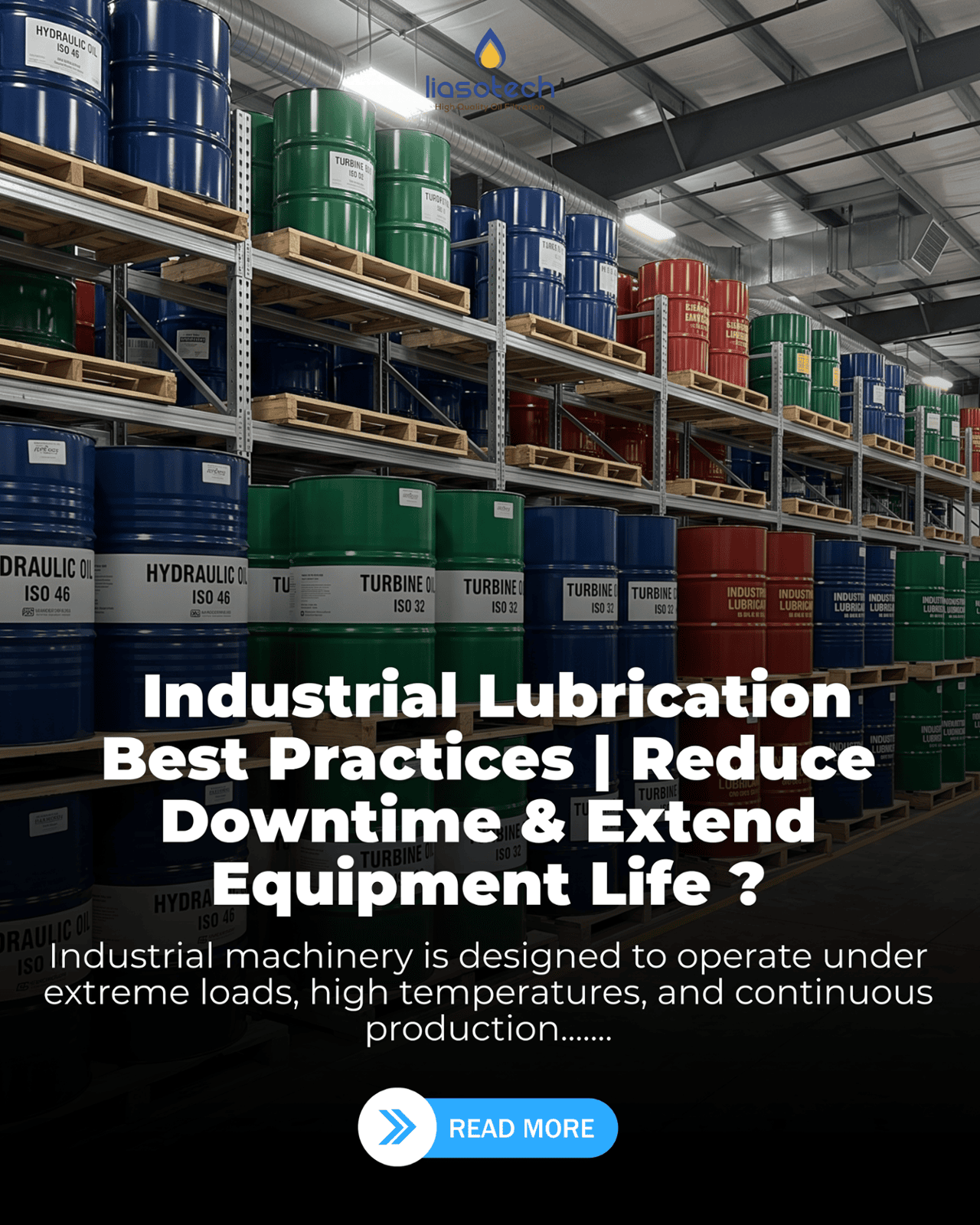
Industrial machinery is designed to operate under extreme loads, high temperatures, and continuous production cycles. Whether it's a hydraulic press in a steel plant, a gearbox in a cement mill, or a turbine in a power station, every critical asset depends on one essential factor for reliable performance—clean, well-maintained lubricating oil.
Yet, lubrication is often treated as a routine maintenance task rather than a strategic reliability program. Many plants focus on replacing failed components while overlooking the condition of the lubricant that protects them. The result is increased wear, unexpected downtime, higher maintenance costs, and shorter equipment life.
Adopting the right industrial lubrication best practices helps manufacturers improve equipment reliability, reduce oil consumption, and maximize the return on their maintenance investments.
Why Industrial Lubrication Matters
Lubricants do much more than reduce friction. They perform several critical functions that keep industrial equipment operating efficiently:
Minimize friction between moving components
Reduce wear on bearings, gears, and hydraulic parts
Dissipate operating heat
Protect metal surfaces from corrosion
Remove contaminants
Maintain hydraulic system efficiency
Extend machinery life
However, lubricant performance depends entirely on its cleanliness and condition.
Even premium-quality lubricants lose their effectiveness when contaminated with particles, moisture, or oxidation by-products.
The Biggest Threat to Industrial Lubrication: Oil Contamination
Studies across the industrial maintenance sector consistently identify oil contamination as one of the leading causes of hydraulic and lubrication system failures.
Common contaminants include:
Solid Particles
Dust, sand, welding residue, rust, and metal wear particles enter equipment during operation, maintenance, or oil transfer.
These microscopic particles create abrasive wear that damages bearings, pumps, valves, and gears.
Water Contamination
Water enters lubricants through:
Condensation
Steam leaks
Cooler failures
High humidity
Improper storage
Water reduces lubrication performance, promotes corrosion, and accelerates oxidation.
A vacuum dehydration system is one of the most effective solutions for removing free, emulsified, and dissolved water from industrial oils.
Oxidation Products
High temperatures gradually oxidize lubricants, producing sludge, varnish, and acidic compounds.
These deposits restrict oil flow, reduce heat transfer, and impair the performance of hydraulic valves and bearings.
Best Practice 1: Keep Oil Clean from Day One
One of the most common misconceptions in industrial maintenance is that fresh oil is always clean.
In reality, new lubricants frequently contain contamination levels above what modern hydraulic systems can tolerate.
Before adding fresh oil to any reservoir:
Filter new oil before use
Use dedicated transfer containers
Store lubricants in sealed, clean environments
Label oils to prevent cross-contamination
Installing an industrial oil filtration system ensures both new and in-service oil meets the cleanliness requirements of sensitive equipment.
Best Practice 2: Monitor Oil Condition Regularly
You cannot manage what you do not measure.
Routine oil analysis provides valuable insights into lubricant health before equipment failures occur.
A comprehensive oil testing program should monitor:
ISO Cleanliness Code
NAS Cleanliness Level
Moisture content
Viscosity
Wear metals
Oxidation
Total Acid Number (TAN)
Particle count
Oil analysis enables predictive maintenance by identifying contamination trends long before they become costly failures.
Best Practice 3: Use the Right Oil Filtration System
Not all contamination requires the same filtration method.
Choosing the appropriate oil filtration system depends on both lubricant type and contamination source.
Hydraulic Oil Filtration Machine
Ideal for removing:
Solid particles
Sludge
Wear debris
Carbon deposits
Suitable for hydraulic systems, gearboxes, lubrication systems, and circulating oils.
Vacuum Dehydration Filtration System
Designed to eliminate:
Free water
Emulsified water
Dissolved water
Dissolved gases
Recommended for turbine oil, transformer oil, hydraulic oil, and high-value lubricants.
Electrostatic Oil Purifier
Best suited for removing:
Varnish
Oxidation products
Fine carbon contamination
Submicron particles
Best Practice 4: Avoid Scheduled Oil Changes Alone
Many plants still replace lubricants based solely on calendar schedules.
This approach often wastes perfectly usable oil while failing to prevent contamination between oil changes.
A better strategy combines:
Oil analysis
Condition monitoring
Industrial oil filtration
Predictive maintenance
This allows plants to replace oil only when its chemical properties have genuinely deteriorated.
Best Practice 5: Control Contamination at Every Entry Point
Preventing contamination is significantly more cost-effective than removing it later.
Simple contamination control measures include:
High-quality breather filters
Clean filling procedures
Sealed storage containers
Proper hose management
Clean maintenance practices
Dedicated oil transfer equipment
Combined with continuous hydraulic oil filtration, these practices significantly reduce equipment failures.
Best Practice 6: Extend Oil Life Instead of Replacing It
Industrial lubricants represent a significant operating expense.
With proper oil filtration services, many plants extend lubricant life by three to five times while maintaining optimal cleanliness levels.
Benefits include:
Lower lubricant purchases
Reduced disposal costs
Less downtime
Lower maintenance costs
Improved equipment reliability
Better sustainability
The Business Benefits of Effective Lubrication Management
Implementing industrial lubrication best practices delivers measurable operational improvements.
Increased Equipment Reliability
Clean oil reduces abrasive wear and extends component life.
Reduced Downtime
Fewer lubrication-related failures mean higher production availability.
Lower Maintenance Costs
Preventive filtration minimizes expensive repairs and emergency maintenance.
Extended Oil Service Life
Regular oil purification significantly delays lubricant replacement.
Higher Return on Maintenance Investment
Every rupee spent on contamination control protects valuable production assets.
Why Choose Liasotech?
At Liasotech Pvt. Ltd., we believe lubrication should be managed—not simply replaced.
Our comprehensive solutions include:
Industrial Oil Filtration Systems
Hydraulic Oil Filtration Machines
Vacuum Dehydration Filtration Systems (VDFS)
Portable Oil Filtration Units
Oil Analysis & Testing Services
On-site Oil Filtration Services
Customized Oil Purification Solutions
Our systems help industries maintain cleaner oil, improve equipment reliability, reduce downtime, and maximize lubricant life across steel, cement, power, mining, plastics, engineering, and manufacturing sectors.
Conclusion
Industrial lubrication is no longer just about selecting the right lubricant—it is about maintaining its cleanliness throughout its service life.
By implementing proven lubrication best practices, supported by regular oil analysis, effective industrial oil filtration, and proactive contamination control, manufacturers can reduce maintenance costs, extend equipment life, and improve overall plant reliability.
The question is no longer "When should we replace the oil?"
It is "How can we keep our oil clean enough to keep performing?"
With the right filtration strategy, the answer is both practical and profitable.
Partner with Liasotech to build a smarter lubrication program that keeps your equipment running longer, cleaner, and more efficiently.